
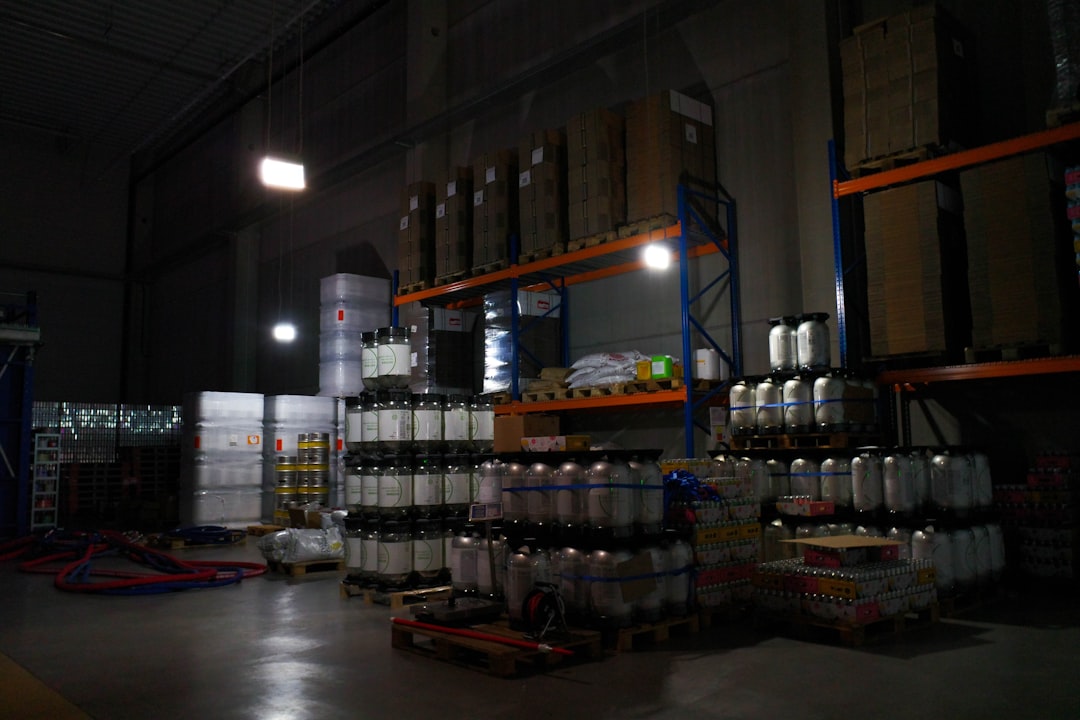
Selective vs Drive-In vs Push-Back Racking for Warehouse Efficiency
Selecting the appropriate warehouse racking system is a critical decision in warehouse management. Your chosen layout directly impacts storage capacity, picking speed, forklift movement, inventory control, and overall efficiency.
For warehouse managers and industry professionals, the challenge is not simply finding a place to store pallets. The real goal is to create a storage system that supports daily operations, improves workflow, and makes the best use of available space.
Three of the most common pallet racking systems used in warehouses today are selective, drive-in, and push-back. Each system offers different benefits and drawbacks, and each one is designed for different storage needs.
In this guide, we compare selective, drive-in, and push-back racking, explain their advantages and disadvantages, and show how they affect warehouse storage capacity and operational functionality.
Why Warehouse Racking Systems Matter
A warehouse racking system does more than hold inventory. It shapes the way products move through the facility. The right system can help a warehouse:
- Increase storage capacity
- Improve pallet accessibility
- Reduce wasted floor space.
- Support faster picking and replenishment.
- Improve inventory organization
- Reduce forklift congestion
- Increase overall warehouse efficiency.
The best racking system depends on several factors, including the number of SKUs, pallet volume, inventory turnover, available space, and whether the warehouse requires direct access to every pallet.
What Is Selective Racking?
Selective racking is the most common type of pallet racking system. It is designed so that every pallet can be accessed directly without moving any other pallets first. This makes it one of the most flexible and widely used warehouse storage solutions.
Benefits of Selective Racking
The biggest advantage of selective racking is the direct access that it provides. Every pallet is visible and accessible, making this system ideal for warehouses with many SKUs and frequent picking.
Selective racking also offers greater flexibility. It is easier to install, expand, and reconfigure than many high-density storage systems. If your inventory changes often or your warehouse needs to adapt over time, selective racking provides that freedom.
Another major benefit is easier inventory control. Because every pallet is accessible, stock counts, rotation, and product tracking are simpler to manage.
Drawbacks of Selective Racking
The main drawback of selective racking is lower storage density. Because this system requires more aisles, it uses more floor space than denser systems such as drive-in or push-back racking.
For warehouses storing large quantities of the same item, selective racking may not be the most efficient use of available space. It is excellent for accessibility, but not always the best option for maximizing storage capacity.
Best Applications for Selective Racking
Selective racking works best in:
- Warehouses with a large number of SKUs
- Distribution centers with frequent picking
- Operations that need direct pallet access
- Facilities with fast inventory turnover
- Businesses that need flexible storage layouts
How Selective Racking Impacts Warehouse Efficiency and Storage Capacity
Selective racking improves warehouse efficiency by making pallets easy to locate, retrieve, and manage. It reduces search time and supports faster picking and replenishment.
However, its storage capacity is lower than that of high-density systems because it requires more aisle space. For warehouses where access is more important than density, selective racking is often the best choice.
What Is Drive-In Racking?
Drive-in racking is a high-density pallet racking system that allows you to drive forklifts directly into the rack structure. Pallets are stored several positions deep in each lane, reducing aisle space and increasing storage density.
This system is commonly used for large volumes of similar products and typically employs a last-in, first-out (LIFO) inventory method.
Benefits of Drive-In Racking
The biggest benefit of drive-in racking is high storage density. Because it reduces the number of aisles needed, it allows warehouses to store more pallets in the same footprint.
This makes drive-in racking a strong choice for warehouses with limited floor space or facilities looking to delay expansion costs.
Drive-in racking is also useful for bulk storage. If a warehouse stores large quantities of the same SKU, this system can be a highly efficient solution.
Drawbacks of Drive-In Racking
The main drawback of drive-in racking is reduced selectivity. Since pallets are stored deep in lanes, not every pallet is directly accessible.
This makes drive-in racking less suitable for warehouses with many SKUs or operations that require strict inventory rotation.
Another drawback is that forklifts must enter the rack system, which can increase the risk of rack damage if the system is not used properly. It also requires skilled forklift operation and strong lane management.
Best Applications for Drive-In Racking
Drive-in racking works best in:
- Cold storage warehouses
- Food and beverage storage
- Bulk inventory storage
- Seasonal product storage
- Manufacturing buffer stock
- Warehouses with a small number of SKUs and high pallet volume
How Drive-In Racking Impacts Warehouse Efficiency and Storage Capacity
Drive-in racking significantly increases storage capacity by increasing the number of pallet positions within a given space. It is one of the best options for maximizing warehouse storage density.
Its effect on warehouse efficiency depends on the operation. It improves space utilization but can reduce flexibility and slow down retrieval in warehouses with mixed inventory. For bulk storage of similar products, it can be highly effective. For fast-moving, mixed-SKU operations, it may be less efficient.
What Is Push-Back Racking?
Push-back racking is a high-density storage system that stores pallets on nested carts or rails set on a slight incline. When a new pallet is loaded, it pushes the previous pallet back, and when a pallet is removed, the next pallet moves forward automatically.
Like drive-in racking, push-back racking is usually a last-in, first-out (LIFO) system, but it offers better accessibility because forklifts do not need to enter the rack.
Benefits of Push-Back Racking
Push-back racking offers a strong balance between storage density and accessibility. It provides more storage capacity than selective racking while allowing pallets to be loaded and unloaded from the aisle face.
Because forklifts stay in the aisle, loading and unloading is often faster and safer than with drive-in racking. This can improve productivity and reduce the risk of rack impact.
Push-back racking is also useful for organizing multiple pallets of the same SKU in a single lane while still supporting efficient access.
Drawbacks of Push-Back Racking
The main drawback of push-back racking is cost. It is generally more complex than selective racking and often more expensive because it relies on carts, rails, or similar mechanical components.
It is also not ideal for a strict FIFO inventory flow. Since pallets are typically loaded and retrieved from the same side, LIFO operations work best.
Push-back racking also depends on consistent pallet quality and proper load handling. Damaged or inconsistent pallets can cause performance issues.
Best Applications for Push-Back Racking
Push-back racking works best in:
- Warehouses that need more density than selective racking
- Distribution centers with moderate SKU variety
- Staging areas
- Consumer goods storage
- Food and beverage operations with controlled product flow
- Facilities that want high-density storage without forklifts entering the rack
How Push-Back Racking Impacts Warehouse Efficiency and Storage Capacity
Push-back racking improves storage density while maintaining better access than drive-in racking. This makes it a strong choice for warehouses looking to increase pallet positions without sacrificing operational speed.
It helps improve warehouse efficiency by keeping forklifts in the aisle and reducing travel within rack structures. In many operations, it provides a practical middle ground between selective access and high-density storage.
Selective Racking vs Drive-In Racking vs Push-Back Racking
When comparing these three pallet racking systems, the key difference lies between access and density.
Selective racking gives the best direct access to inventory. It is ideal for warehouses with many SKUs and frequent picking needs.
Drive-in racking offers the highest storage density. It is best for storing large volumes of the same product in a limited footprint.
Push-back racking balances density and access. It is a good option for warehouses that need more capacity than selective racking but do not want the limitations of drive-in storage.
Which Warehouse Racking System Is Best?
The best warehouse racking system depends on your inventory profile and operational goals.
If your operation needs direct access to every pallet, selective racking is usually the best choice.
If your main goal is maximizing storage capacity for a small number of SKUs, drive-in racking is often the better option.
If you need a balance of warehouse efficiency, storage density, and faster aisle-based access, push-back racking may be the right solution.
Many warehouses use a combination of systems. For example, selective racking may be used for fast-moving products, while drive-in or push-back racking is used for reserve storage or bulk inventory.
Final Thoughts
There is no one-size-fits-all answer when comparing selective racking, drive-in racking, and push-back racking. Each system has clear strengths, clear limitations, and ideal use cases.
Selective racking is best for flexibility and direct pallet access.
Drive-in racking is best for maximum storage density.
Push-back racking is best for balancing density and accessibility.
Drive-in racking is best for maximum storage density.
Push-back racking is best for balancing density and accessibility.
For warehouse managers, the right choice comes down to inventory flow, SKU count, available space, and operational priorities. When the racking system aligns with the warehouse’s needs, the result is improved storage capacity, better workflow, and better overall warehouse performance.
FAQ
What is the difference between selective racking and drive-in racking?
Selective racking allows access to every pallet. Drive-in racking stores pallets deep in lanes, increasing storage density but reducing direct access.
Is push-back racking better than selective racking?
Push-back racking is not always better. It provides more storage density, but selective racking offers better direct access to each pallet. The best option depends on your warehouse needs.
Which racking system gives the highest storage capacity?
Drive-in racking usually provides the highest storage capacity because it reduces aisle space and stores pallets deep within each lane.
Which racking system is best for many SKUs?
Selective racking is usually best for warehouses with many SKUs because every pallet can be accessed directly.
Is drive-in racking FIFO or LIFO?
Drive-in racking is typically used as a LIFO system.
Is push-back racking FIFO or LIFO?
Push-back racking is generally a LIFO system because pallets are loaded and unloaded from the same aisle face.
Which racking system is best for cold storage?
Drive-in racking is often a strong choice for cold storage because it maximizes storage density in expensive temperature-controlled space.
Can a warehouse use more than one racking system?
Yes. Many warehouses use a mix of pallet racking systems to match different inventory types, storage needs, and picking requirements.
Check out more on cost-effective racking solutions contact us anytime:
NorthStar Racking & Construction: Expert Pallet Racking Solutions
northstarracking.com
115 N Main St Creston, OH 44217
330-293-4888 Office
Warehouse racking installation, buildouts, tenant improvements, relocations, and commercial construction across the Midwest and beyond. Request a quote.
