
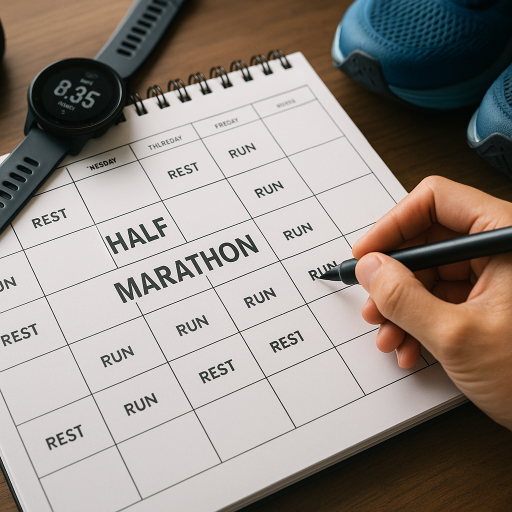
Your first half marathon is exciting for all the right reasons: it gives you a serious goal, a clear training focus, and a finish line that feels truly earned. It can also feel overwhelming at the start. The best way to reduce that pressure is to break the process into a simple, realistic checklist. With the right half marathon calendar, a sensible training rhythm, and a clear race-week plan, your first 13.1 miles can feel less like a leap into the unknown and more like a challenge you are genuinely ready to meet.
Choose the Right Race for Your First Half Marathon Calendar
Not every race is ideal for a first-time runner. A smart first step is choosing an event that matches your current fitness, schedule, and temperament. Some runners thrive on big-city energy and large crowds, while others prefer a smaller local event with easier logistics and a calmer start line. The course itself matters too. A flat route is often more forgiving for beginners than a hilly one, and mild weather is usually easier to manage than extreme heat or cold.
When you are planning your season, timing matters as much as motivation. You want a race date that gives you enough room to train consistently without cramming long runs into a busy or stressful period of life. If you are still choosing an event, browsing a reliable half marathon calendar can make it easier to compare dates, locations, and course styles without rushing the decision.
- Course profile: Look for a route that suits a first-time effort, especially if you are still building confidence.
- Weather conditions: Consider the time of year and what conditions you handle best in training.
- Travel demands: A local race often simplifies race morning and reduces unnecessary stress.
- Training runway: Pick a date that allows steady preparation rather than last-minute panic.
- Event atmosphere: Think about whether you want a lively crowd, a quieter setting, or something in between.
The goal is not simply to enter a race. It is to enter the right race for this stage of your running life.
Build Your Training Base Before You Chase Distance
One of the most common mistakes first-time half marathon runners make is focusing only on the long run. Distance matters, but consistency matters more. Your body adapts best when running becomes a regular part of your week rather than an occasional heroic effort. Before your longest runs start to grow, make sure you have a stable foundation of easy running.
A balanced beginner plan usually includes several different types of work: easy runs, one weekly long run, rest or active recovery days, and some basic strength work. You do not need an elaborate schedule. You do need structure. Easy runs build aerobic endurance, long runs help you get comfortable spending more time on your feet, and rest days allow your training to actually sink in.
- Establish a consistent weekly routine. Run often enough that your body recognizes the pattern.
- Increase gradually. Let mileage build in manageable steps rather than sudden jumps.
- Keep most runs easy. If every run feels hard, recovery will become the weak point in your plan.
- Practice race-day habits during training. Long runs are where you test pacing, hydration, and comfort.
- Add basic strength and mobility. A stronger, more stable body handles training more efficiently.
It is also important to train according to your own starting point. If you already run regularly, you may be ready to progress sooner. If you are new to running, patience is not a compromise; it is part of the preparation. A successful first half marathon comes from layering good weeks together, not from forcing a single breakthrough workout.
Get the Essentials Right: Gear, Fuel, and Recovery
Half marathon preparation is not only about mileage. Comfort, recovery, and basic race-day fueling can make the difference between a steady, enjoyable experience and a difficult final few miles. The good news is that you do not need an excessive amount of gear. You need the right gear, used consistently enough that nothing feels unfamiliar when race day arrives.
Your shoes should feel supportive and suited to your gait, but they should also be broken in before the event. Race day is never the time for brand-new footwear. The same goes for socks, shorts, tops, and any anti-chafing products you rely on. A half marathon is long enough for small irritations to become major distractions.
- Running shoes: Choose a pair that feels comfortable over longer efforts, not just short runs.
- Technical clothing: Prioritize breathable fabrics and weather-appropriate layers.
- Hydration plan: Know whether you will carry water or use on-course aid stations.
- Fueling practice: If you plan to use gels or chews, test them in training first.
- Recovery basics: Prioritize sleep, easy movement, and enough food to support training.
Nutrition does not need to become complicated, but it does need attention. Arriving at long runs underfueled can make training feel harder than it should. Likewise, ignoring recovery can turn manageable fatigue into soreness that lingers. Your body improves during recovery, not just during the run itself.
Use a Half Marathon Calendar to Organize Race Week
Race week should feel calm, not chaotic. By this stage, the most important work is already done. Your job is to protect the training you have built by keeping the final days orderly and predictable. This is where a half marathon calendar becomes especially useful: it helps you map out the final stretch so that nothing important gets forgotten.
You do not need to squeeze in extra fitness at the last minute. Instead, focus on rest, routine, and confidence. Lay out your gear early, confirm your travel arrangements, and make sure you know where the start line is, when you need to arrive, and what you plan to eat beforehand.
| Timing | What to Focus On | What to Avoid |
|---|---|---|
| 1 week out | Reduce overall training load, maintain light movement, check logistics | Adding hard workouts to “catch up” |
| 2 to 3 days out | Hydrate steadily, sleep well, prepare gear, keep meals familiar | Heavy indulgent meals or drastic diet changes |
| Day before | Short easy movement if desired, packet pickup, early evening wind-down | Too much walking, standing, or late-night activity |
| Race morning | Eat a familiar pre-run meal, arrive early, warm up gently, start controlled | Rushing, skipping breakfast, or starting too fast |
Pacing deserves special attention. First-time runners often get pulled along by the adrenaline of the start. The crowd is lively, your legs feel fresh, and everything tells you to go faster than planned. Resist that urge. A patient first half sets you up for a much stronger second half. Even pacing, or a slightly conservative opening, usually leads to a better overall experience.
Prepare Mentally for the Distance and Finish Strong
The first half marathon is as much a mental event as a physical one. At some point, the novelty wears off and the work begins. That moment might come in the middle miles when the race settles down, or later when fatigue starts to build. Mental preparation helps you stay composed instead of interpreting normal discomfort as a sign that something is going wrong.
Break the race into smaller parts. Focus on the first few miles as a warm-up, the middle miles as a chance to settle into rhythm, and the final stretch as the point where discipline matters most. Simple cues help: relax your shoulders, keep your cadence steady, take your fuel when planned, and stay present. You do not need to feel perfect. You need to keep moving with intention.
Most importantly, remember what success really looks like in a first attempt. It is not about proving something dramatic. It is about arriving prepared, adapting well, and learning from the experience. A smart half marathon calendar, honest training, and a calm race-week routine put you in position to do exactly that. When you cross the finish line, you will not just have completed a race. You will have built the habits and confidence that make the next one even better.
——————-
Check out more on half marathon calendar contact us anytime:
Half Marathons | Half Marathon Calendar USA | Half Marathons 2026 | Half Marathons 2027
https://www.halfmarathonsearch.com/
USA
Are you ready to hit the pavement and push your limits? Discover the ultimate directory of half marathons throughout the USA, where every step leads to new challenges, breathtaking sceneries, and personal triumphs. Lace up your running shoes and embark on a thrilling journey. Find your next half marathon at Half Marathon Calendar USA HalfMarathonSearch.com, and start planning your next half marathon destination. Let your running adventures begin!
